Top 5 Reasons Fall Is Key to Choosing Your Compliance Translation Partner
Are You Leveraging Fall to Prepare for Q1 Compliance? In Canada’s highly regulated financial services sector, the reporting cycle is defined by complexity, urgency, and constant change.
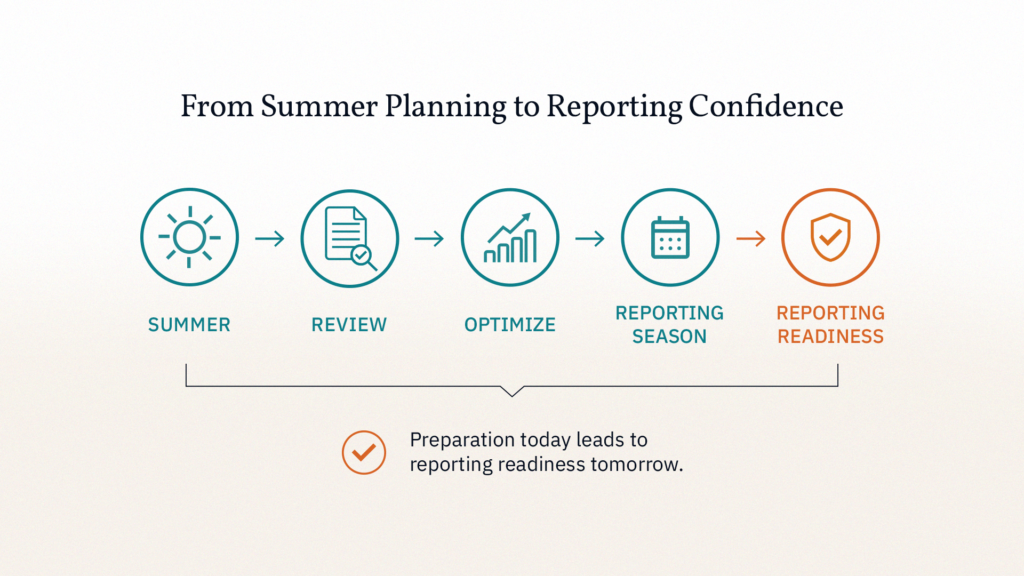
Why Summer Is the Best Time to Prepare for the Next Financial Reporting Cycle
Christine Clay··
3 min read
Financial reporting doesn’t stop when filing season ends.
Annual reports give way to interim reporting. Investor communications continue. Board materials, regulatory filings, and disclosure obligations keep moving.
For many organizations, summer is one of the few opportunities to step back and ask a different question.
Will our reporting workflow hold up when deadlines return?
The next reporting cycle is often won or lost long before the first deadline arrives. Processes that rely on last-minute requests, stretched internal resources, disconnected review cycles, or inconsistent terminology become harder to fix once filing deadlines begin to approach.
That’s why leading financial institutions use this quieter period to review their multilingual reporting workflows, resolve operational bottlenecks, and strengthen the processes they’ll rely on throughout the rest of the year.
Table of Contents
Why the Quiet Moments Matter
Reporting pressure rarely begins with the first filing deadline. It builds gradually as timelines tighten, review cycles become more complex, and internal resources are stretched across competing priorities.
That’s what makes summer different.
Before workloads begin to increase again, teams have an opportunity to step back and strengthen the processes that support multilingual financial communication.
Summer is an ideal time to:
Identify workflow bottlenecks before they affect critical deadlines.
Review approval processes and responsibilities.
Align terminology across teams and documents.
Confirm external partners have the capacity to support peak reporting periods.
Four Areas Worth Reviewing Before Reporting Picks Up
76% of CFOs are focused on streamlining accounting and finance processes1.
Reporting pressure builds quickly. Strong workflows don’t. They need time.
A few months of preparation can help reduce last-minute challenges when reporting volumes increase. As you review your current process, these are four areas worth evaluating.
1. Capacity Consider whether your internal team and external partners have the capacity to support increased reporting volumes without creating delays or unnecessary pressure.
2. Workflow Review how content moves from request to delivery. Multiple handoffs, unclear ownership, and inconsistent processes can slow progress and increase the risk of errors.
3. Review and Terminology Consistent terminology and clearly defined review responsibilities help reduce rework, conflicting edits, and version control issues across teams.
4. Vendor Readiness Reporting periods are not the time to discover capacity constraints or onboarding gaps. Confirm your translation partner understands your reporting requirements, timelines, and expectations well before deadlines begin to build.
Putting Your Workflow to the Test
Even well-established reporting processes can develop inefficiencies over time.
New stakeholders join. Approval workflows evolve. Reporting requirements change.
What worked last year may no longer support the next reporting cycle as effectively.
Taking a structured review now can help identify opportunities to improve consistency, reduce manual effort, and strengthen operational readiness before reporting pressures return.
Is Your Workflow Ready?
Download Financial Workflow Health Check: 12 Questions to Ask Before Year-End to evaluate your current process, identify potential gaps, and prepare your team for the next reporting cycle.
For more than 20 years, Apertera (formerly Alexa Translations) has helped many of the world’s leading financial institutions strengthen multilingual reporting and financial communication. Today, we combine adaptive AI with professional expertise to help organizations improve consistency, reduce operational risk, and prepare for the demands of financial reporting.
The best time to strengthen your reporting workflow isn’t when deadlines arrive.
It’s now.
Frequently Asked Questions
1. Why should organizations review their reporting workflows before year-end? Reviewing workflows before reporting volumes increase gives teams time to identify bottlenecks, clarify approval processes, align terminology, and confirm external partners are prepared. Addressing these issues early can help reduce delays and improve consistency during peak reporting periods.
2. What should a multilingual reporting workflow include? A well-structured workflow should include clear roles and responsibilities, standardized terminology, defined review and approval processes, version control, and a trusted translation partner with the capacity and expertise to support high-stakes financial reporting.
Are You Leveraging Fall to Prepare for Q1 Compliance? In Canada’s highly regulated financial services sector, the reporting cycle is defined by complexity, urgency, and constant change. Multilingual…
For decades, translation has largely been priced around one simple unit: the word. That made sense when the amount of content a translator could produce in a day…
AI can translate more content, faster than ever before. So translation should be getting simpler. It isn’t. As AI translation becomes more capable, organizations have more choices to…
To provide the best experiences, we use technologies like cookies to store and/or access device information. Consenting to these technologies will allow us to process data such as browsing behaviour or unique IDs on this site. Not consenting or withdrawing consent, may adversely affect certain features and functions.
Functional
Always active
The technical storage or access is strictly necessary for the legitimate purpose of enabling the use of a specific service explicitly requested by the subscriber or user, or for the sole purpose of carrying out the transmission of a communication over an electronic communications network.
Preferences
The technical storage or access is necessary for the legitimate purpose of storing preferences that are not requested by the subscriber or user.
Statistics
The technical storage or access that is used exclusively for statistical purposes.The technical storage or access that is used exclusively for anonymous statistical purposes. Without a subpoena, voluntary compliance on the part of your Internet Service Provider, or additional records from a third party, information stored or retrieved for this purpose alone cannot usually be used to identify you.
Marketing
The technical storage or access is required to create user profiles to send advertising, or to track the user on a website or across several websites for similar marketing purposes.